
That Time I Took A Thai Cooking Class
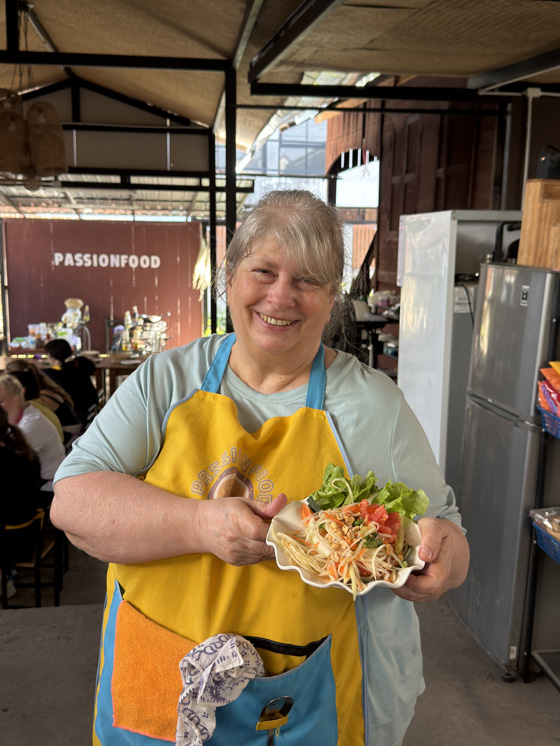
On the agenda: a Thai cooking class with my TikTok friend, who’s in Chiang Mai for a week.
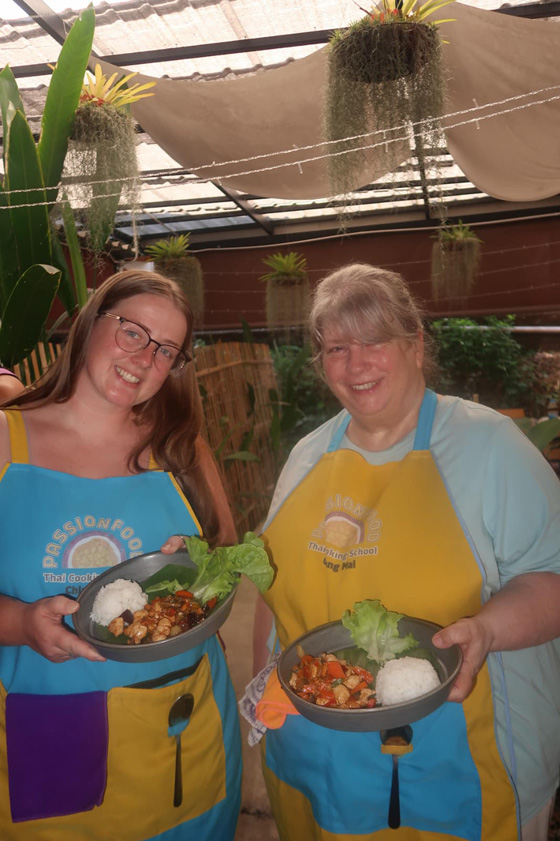
These classes are everywhere here…half- or full-day sessions run by local cooking schools. Some are even accredited; enroll long-term and you can qualify for Thailand’s “soft power” (DTV) student visa. Thailand promotes its soft power through food, film (hello BL/GL), fashion, Muay Thai, festivals, wellness, and the creative industries. Not all come with visas, but many do.
But I digress (as usual).
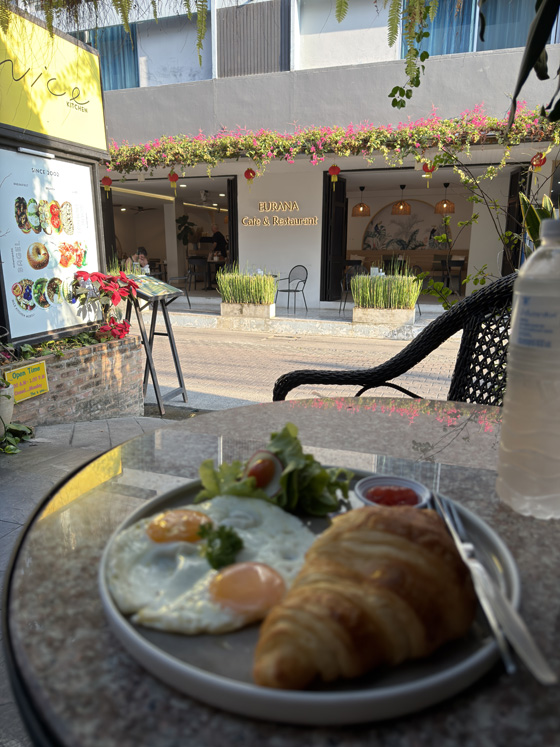
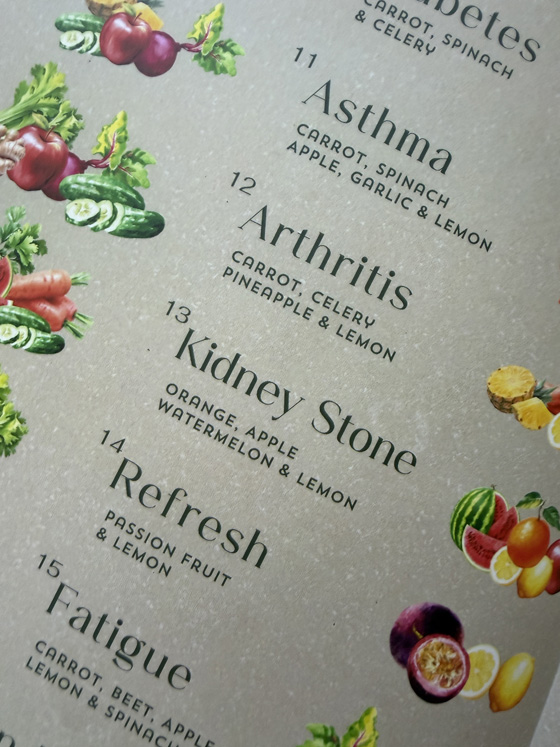
I arrived early at the market where we were meeting, wandered down a side alley, and found a small outdoor café framed by lush ferns. I ordered a croissant with fried eggs and bacon, watermelon and pineapple, and…because how could I not? a “kidney stone” juice. I’m not having issues, but if kidney stone juice is on the menu and sounds delicious, you order it.
Everything was excellent. No time to linger. I paid ($10.86 USD) and hurried back, where the teacher somehow spotted me immediately and called my name.
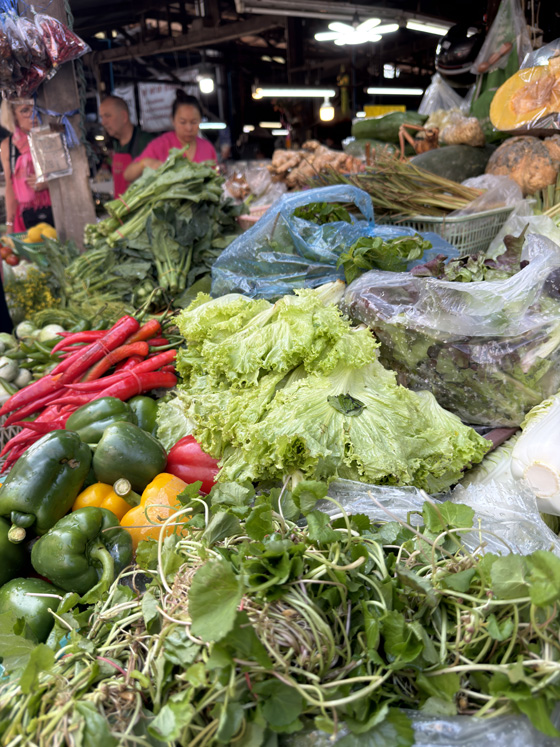
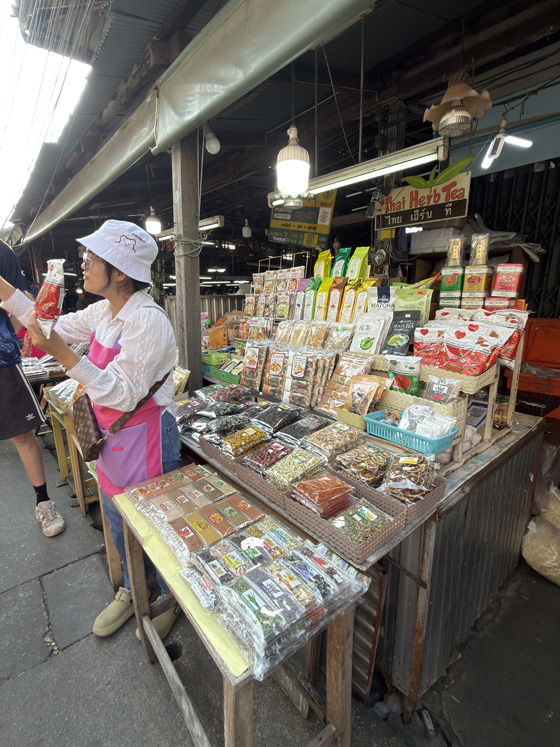
Once all 14 students had arrived, we toured the market to learn about rices, herbs, and seasonings. Before leaving, we chose our menus: appetizer, stir fry, soup, curry paste, curry, dessert, and beverage.
My picks:
-
Papaya salad
-
Cashew nut chicken
-
Tom kha soup
-
Khao soi curry paste and curry
For dessert we all made mango sticky rice with either pandan or butterfly pea sauce, plus Thai tea. The teachers phoned our choices ahead to the farm so the assistants could prep our ingredients and tools.
Then we piled into two red trucks she flagged down and headed out.
Chiang Mai is endlessly surprising. It’s Thailand’s second-largest city, yet you can pass a bank, a nail salon, a café… and suddenly: a temple. Or farm.
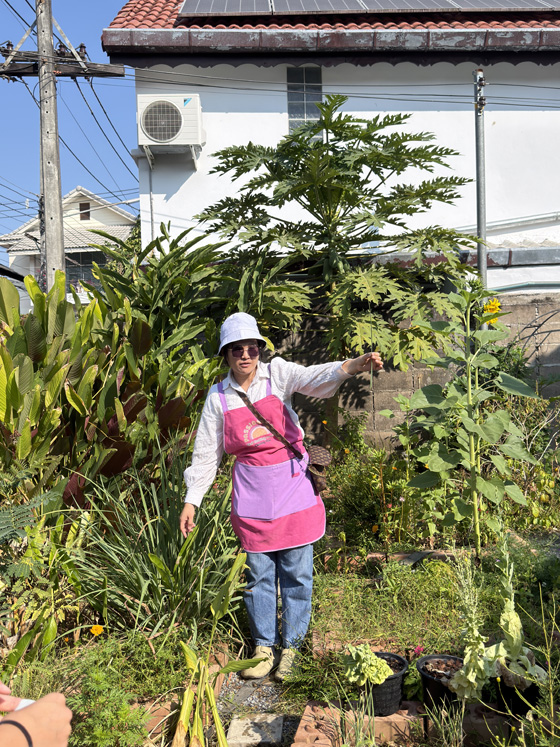
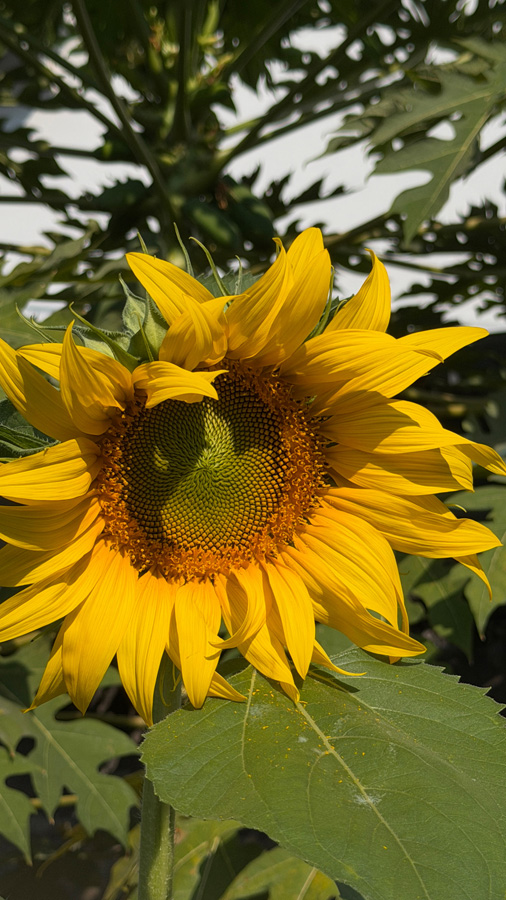
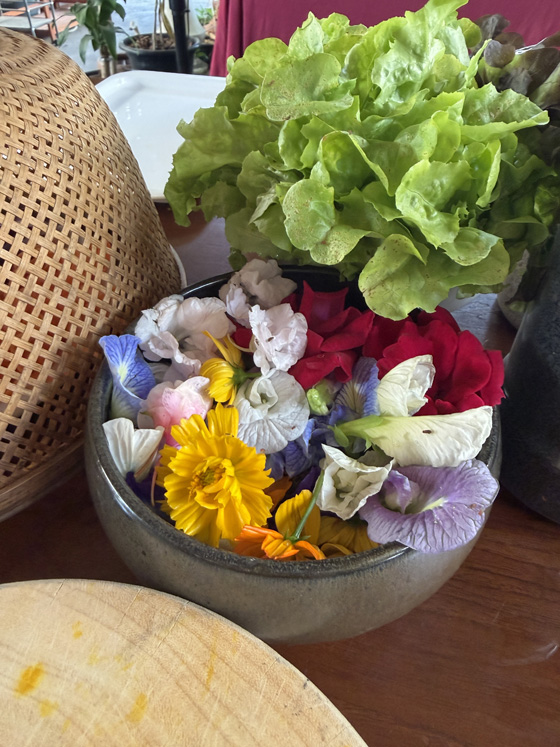
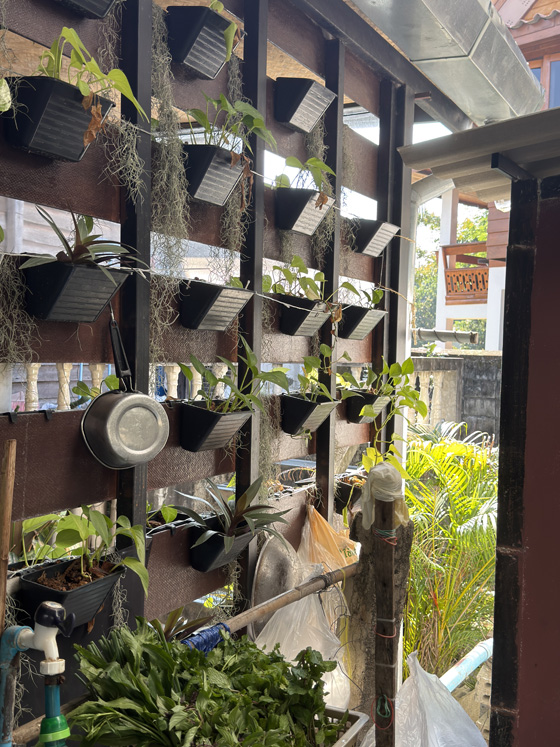
The class was at Passion Food Thai Cooking School, inside the Old Town walls. We stepped out of the trucks into a lush garden of flowers, herbs, banana trees, and holy basil. After a quick tour and a few plant introductions, we were ready to cook.
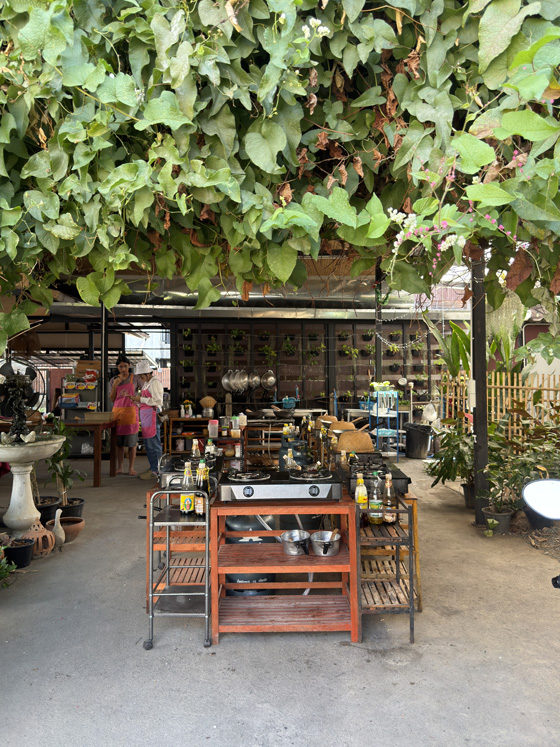
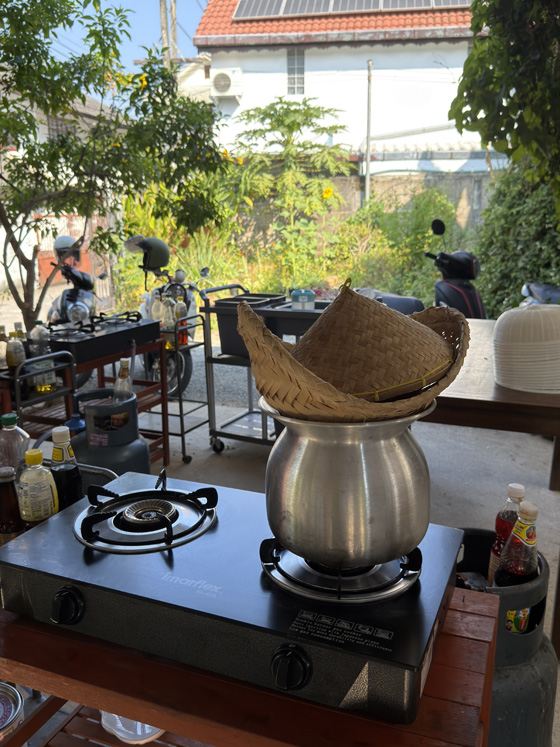
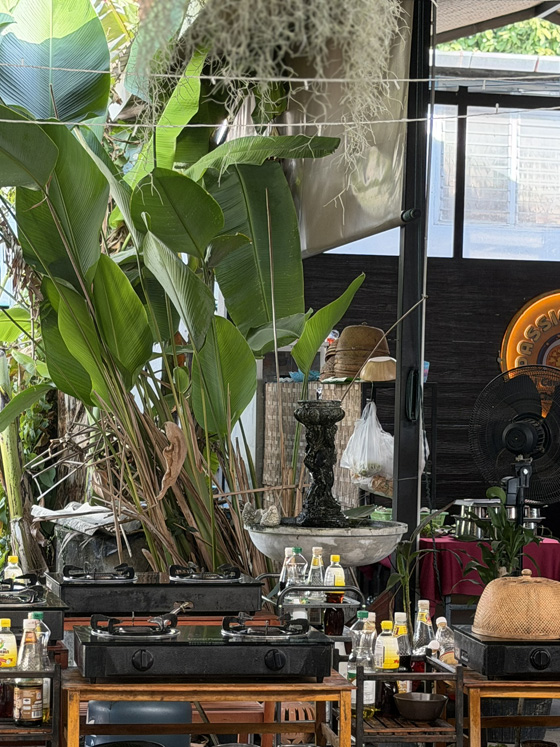
The “kitchen” was an open-air space with a bamboo-style roof and multiple cooking stations. Everything was prepped for us: knives, mortars, woks, and neatly arranged ingredients.
And then we got to work.
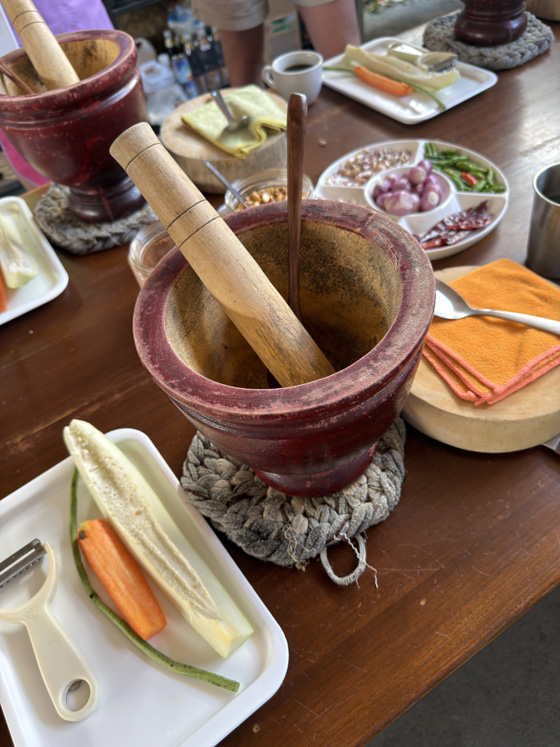
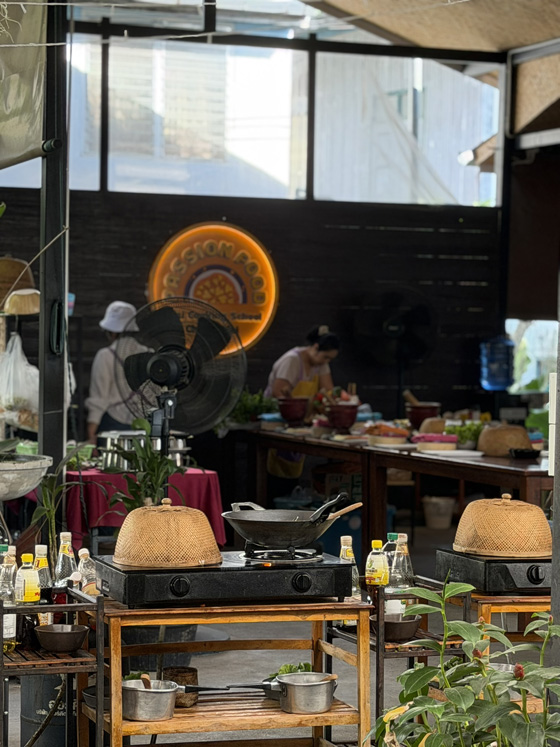
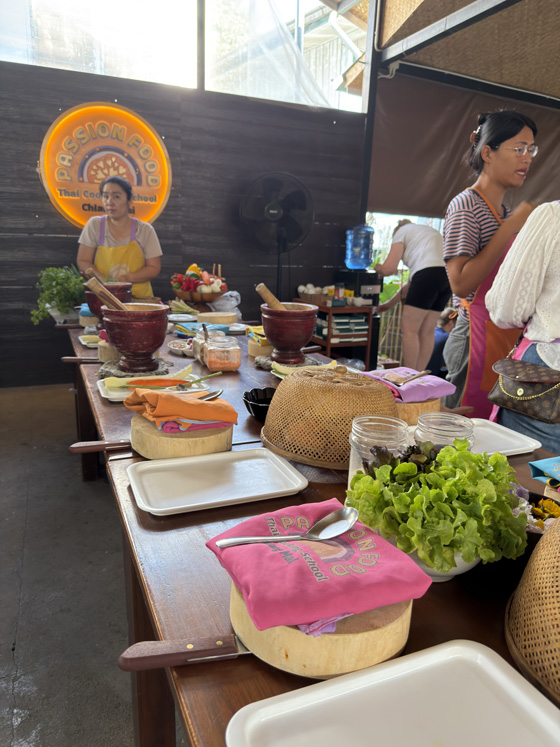
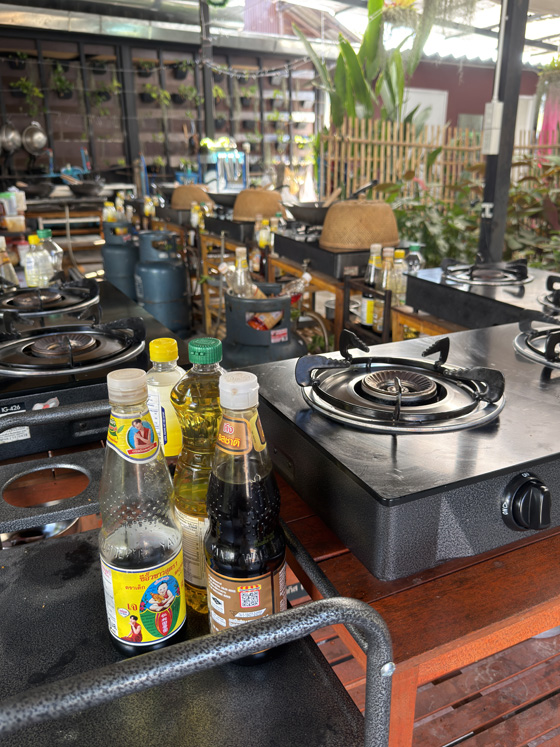
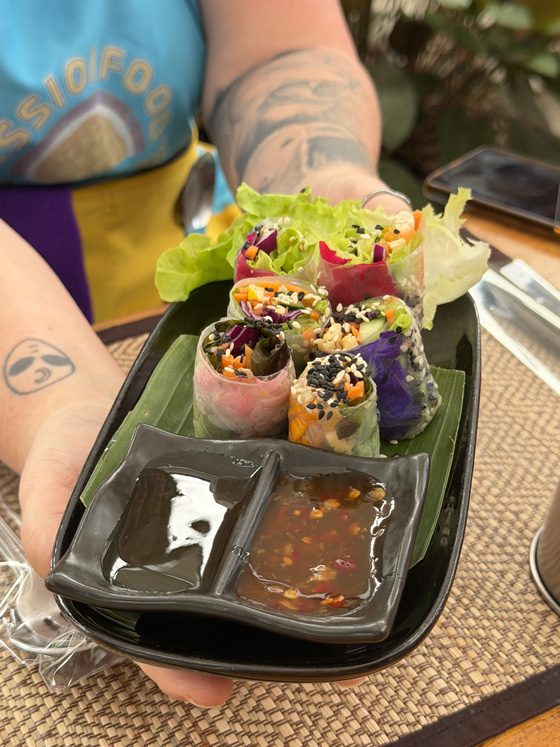
There was slicing, dicing, pounding, stirring, and we did every step ourselves. After finishing the salad and soup, we paused to sit and eat what we’d made. Then back to the stations for the remaining courses, followed by round two of eating.
The teacher was clear, organized, and funny, with lots of entertaining stories woven into the instruction.
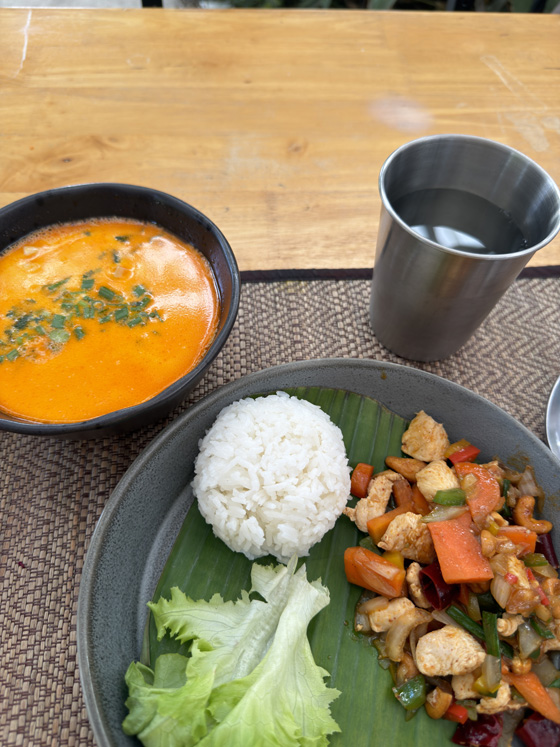
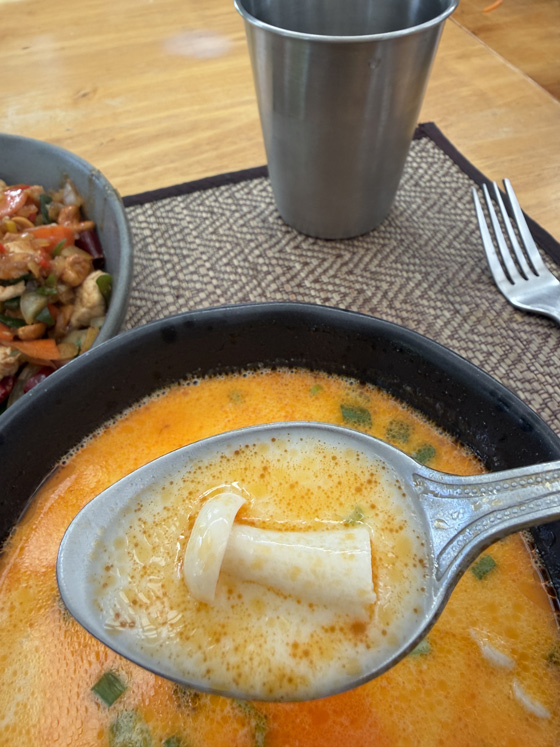
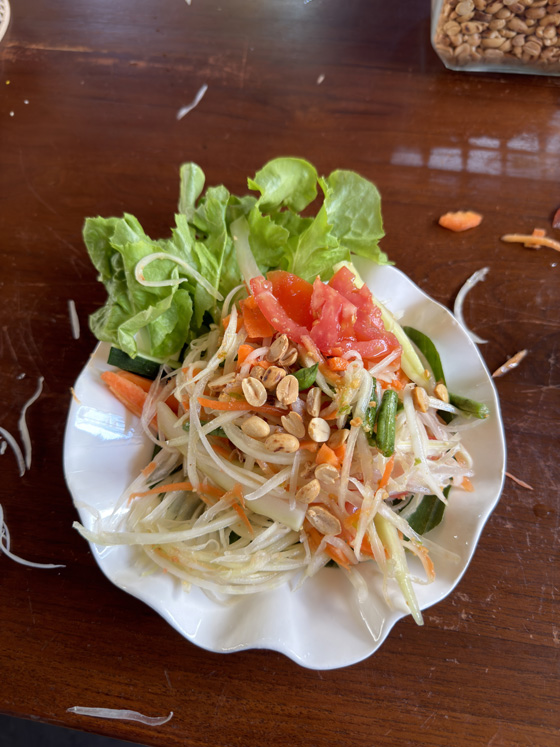
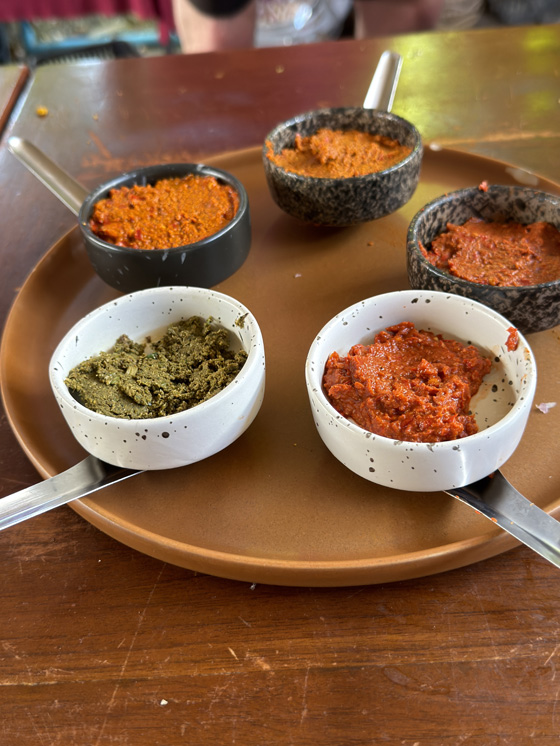
By the end, I was so full from the soup and salad that I could barely eat the curry. Thankfully, leftovers were encouraged. Future me appreciated that.
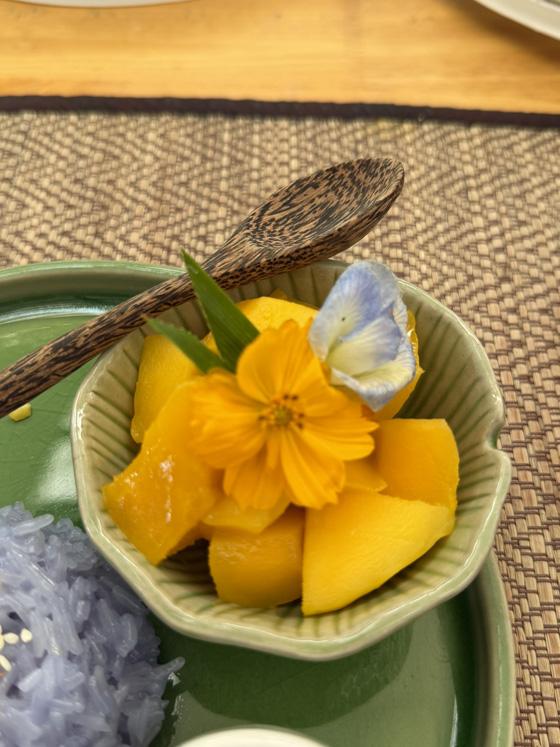
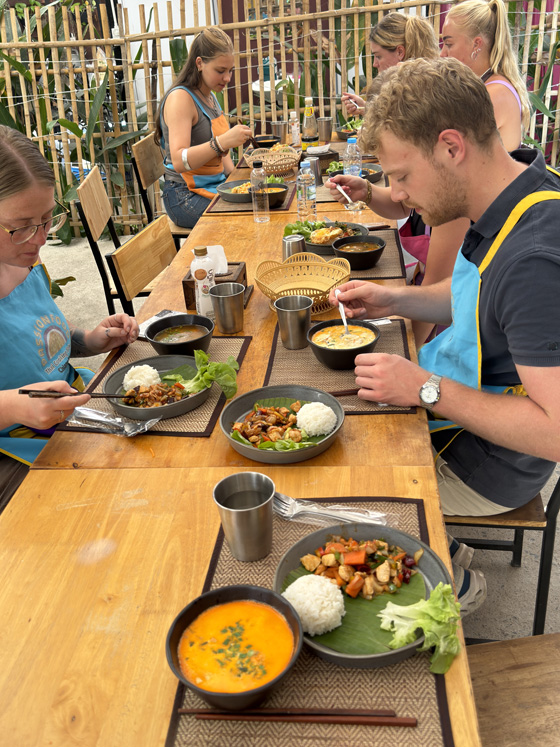
It was only a half-day class, but it felt like a full shift in a professional kitchen. I haven’t stood at a counter cooking for hours in a long time, and my back was not thrilled. I was very grateful when my Grab arrived quickly and blasted the AC all the way home.
The class cost 900 baht (about $29 USD). You couldn’t order that many dishes in a restaurant for that price — and we left with a cookbook containing all the recipes so we could recreate our dishes at home.
Honestly, it was one of those experiences that checks every box: cultural, hands-on, social, delicious, and affordable. I can easily see myself seeking out cooking classes in every country I visit from now on.
For more information about the farm and class, visit Passion Food Thai Cooking School.


em d
This is SO COOL!
I’m sorry…I know every day isn’t glamorous…but what an incredible adventure.
bettyewp
It really was a lot of fun!
Lisa Elliott
You look so happy in these photos! What a fun experience and your colorful photos help us visual the day!!
bettyewp
It *was* fun. HOT, but fun!
Denise
I used to get emails when you’d update your blog but no longer do. It stopped around October. I love reading about your adventures and had many months to catch up. I don’t see a way to sign back up for emails. Is there a way to receive email notifications?
bettyewp
I’m so sorry, I’ve never been able to figure it out. I even asked ChatGPT and it’s like THERE’S 27 THINGS WRONG WITH YOUR BLOG, WE NEED TO FIX THEM ALL and I’m like I just want to fix the email problem! But we can never get there. I’ll try again. Thanks for hanging in there!
bettyewp
OMG, I just spent two hours fighting with EVERYTHING. I feel like I fixed SOME issues, but not ALL of them. So you MAY get an email next time (there’s a post scheduled for 12:01am 3/23)…but you may not 🙁 I tried.